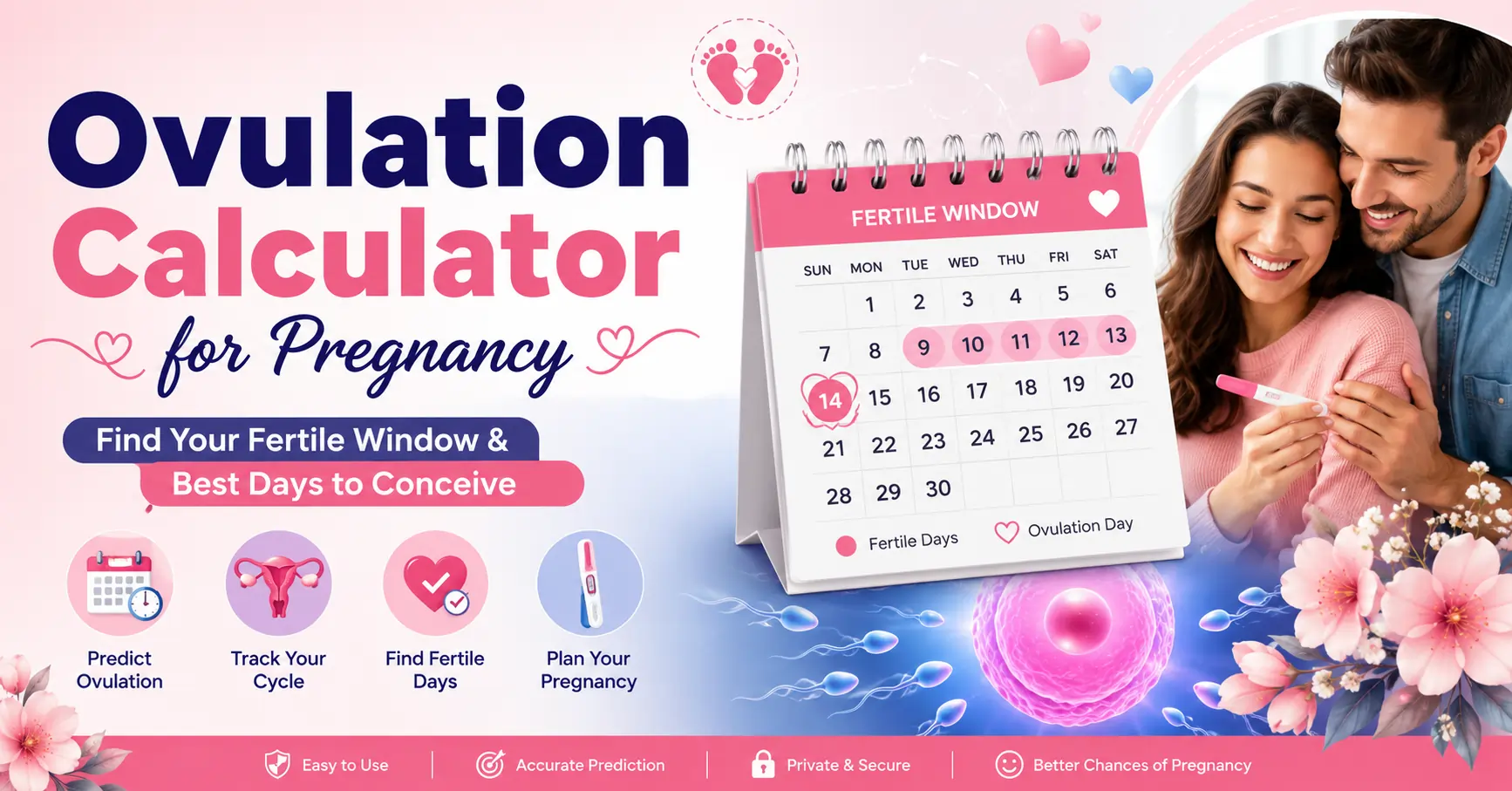
Ovulation Calculator for Pregnancy
🌸 Ovulation Calculator
Find your fertile days and estimate your pregnancy timeline.
🥚 Estimated Ovulation Date
❤️ Fertile Window
💖 Best Days to Conceive
🍼 Estimated Due Date
Planning for a baby is an exciting journey, and understanding your ovulation cycle is one of the most important steps toward increasing your chances of pregnancy. An Ovulation Calculator for Pregnancy helps predict the days when you’re most fertile, making it easier to identify the ideal time for conception.
Whether you’re trying for your first baby or expanding your family, tracking ovulation can provide valuable insights into your menstrual cycle and reproductive health.
What Is Ovulation?
Ovulation is the process where a mature egg is released from one of your ovaries. After the egg is released, it travels into the fallopian tube, where it can be fertilized by sperm.
The egg survives for approximately 12 to 24 hours, while sperm can survive inside the female reproductive tract for up to 5 days.
This means your fertile window lasts around 6 days:
- Five days before ovulation
- The day of ovulation
Having intercourse during this period gives the highest chance of pregnancy.
What Is an Ovulation Calculator?
An ovulation calculator is an online tool that estimates:
- Ovulation day
- Fertile window
- Best days to conceive
- Next menstrual period
- Pregnancy test date
The calculator uses information such as:
- First day of your last menstrual period (LMP)
- Average menstrual cycle length
Although it cannot guarantee pregnancy, it provides a reliable estimate for most women with regular menstrual cycles.
How Does an Ovulation Calculator Work?
The calculator estimates ovulation by subtracting approximately 14 days from your next expected menstrual period.
Example
Last Period Started:
1 July
Cycle Length:
28 Days
Expected Next Period:
29 July
Estimated Ovulation:
15 July
Fertile Window:
10 July – 15 July
Menstrual Cycle Explained
Every menstrual cycle has four stages.
1. Menstrual Phase
The uterus sheds its lining.
Duration:
3–7 days.
2. Follicular Phase
Hormones stimulate follicles in the ovary.
One follicle becomes dominant and prepares an egg.
3. Ovulation
The mature egg is released.
This is the most fertile day.
4. Luteal Phase
The body prepares for pregnancy.
If fertilization doesn’t occur, menstruation begins.
When Are You Most Fertile?
Most women are most fertile:
- Five days before ovulation
- Two days before ovulation
- One day before ovulation
- Ovulation day
Research shows pregnancy chances are highest during the two days before ovulation.
Ovulation Signs
Many women notice physical signs that indicate ovulation.
Common signs include:
- Clear, stretchy cervical mucus
- Mild pelvic pain
- Increased sex drive
- Breast tenderness
- Slight increase in basal body temperature
- Light spotting
- Heightened sense of smell
How to Calculate Ovulation
A simple formula:
Ovulation Day = Cycle Length − 14
Examples:
26-Day Cycle
Ovulation:
Day 12
28-Day Cycle
Ovulation:
Day 14
30-Day Cycle
Ovulation:
Day 16
32-Day Cycle
Ovulation:
Day 18
Fertile Window Chart
| Cycle Length | Ovulation Day | Fertile Window |
|---|---|---|
| 21 Days | Day 7 | Days 2–7 |
| 24 Days | Day 10 | Days 5–10 |
| 26 Days | Day 12 | Days 7–12 |
| 28 Days | Day 14 | Days 9–14 |
| 30 Days | Day 16 | Days 11–16 |
| 32 Days | Day 18 | Days 13–18 |
| 35 Days | Day 21 | Days 16–21 |
Best Time to Get Pregnant
Experts recommend having intercourse:
- Every 1–2 days
- During the fertile window
- Especially 2 days before ovulation
Avoid waiting until ovulation day only.
How Accurate Is an Ovulation Calculator?
For women with regular cycles:
Accuracy is generally good.
However, it may be less accurate if you have:
- Irregular periods
- PCOS
- Hormonal imbalance
- Recently stopped birth control
- Breastfeeding
Ways to Track Ovulation
Besides calculators, you can monitor ovulation using:
Basal Body Temperature
Measure temperature every morning before getting out of bed.
Ovulation Predictor Kits (OPKs)
Detect the LH surge before ovulation.
Cervical Mucus
Egg-white cervical mucus indicates peak fertility.
Fertility Apps
Apps help monitor:
- Periods
- Symptoms
- Ovulation
- Fertile window
Factors That Affect Ovulation
Several lifestyle and health factors can influence ovulation.
These include:
- Stress
- Poor sleep
- Smoking
- Alcohol
- Excessive exercise
- Obesity
- Being underweight
- Hormonal disorders
- Thyroid disease
Tips to Improve Fertility
Healthy habits can support reproductive health:
- Eat a balanced diet.
- Maintain a healthy weight.
- Exercise moderately.
- Avoid smoking.
- Limit alcohol.
- Sleep 7–9 hours.
- Reduce stress.
- Stay hydrated.
- Take folic acid as recommended by your healthcare provider.
Nutrition for Fertility
Include foods rich in:
- Folate
- Iron
- Omega-3 fatty acids
- Zinc
- Vitamin D
- Protein
- Calcium
Examples:
- Eggs
- Spinach
- Salmon
- Lentils
- Yogurt
- Nuts
- Seeds
- Fresh fruits
- Whole grains
Can You Get Pregnant Outside the Fertile Window?
Yes, although the chances are much lower.
Because sperm can survive up to five days, intercourse before ovulation can still lead to pregnancy.
Irregular Periods and Ovulation
Women with irregular cycles may ovulate earlier or later than expected.
Tracking methods such as:
- OPKs
- Basal body temperature
- Cervical mucus
- Medical evaluation
can provide better accuracy than calendar calculations alone.
Common Myths About Ovulation
Myth 1
You always ovulate on day 14.
Fact:
Ovulation depends on your cycle length.
Myth 2
You can only get pregnant on ovulation day.
Fact:
The fertile window lasts about six days.
Myth 3
Regular periods always mean normal ovulation.
Fact:
Some women have regular cycles without ovulating every month.
Myth 4
Stress cannot affect fertility.
Fact:
Chronic stress may interfere with hormonal balance.
Lifestyle Tips While Trying to Conceive
- Track your cycle consistently.
- Eat nutritious meals.
- Stay active.
- Maintain a healthy BMI.
- Limit caffeine intake.
- Avoid smoking and recreational drugs.
- Manage stress through relaxation techniques.
- Schedule regular health check-ups.
When Should You See a Doctor?
Consider speaking with a healthcare provider if:
- You’re under 35 and have tried for 12 months without success.
- You’re 35 or older and have tried for 6 months.
- Your periods are very irregular or absent.
- You have severe pelvic pain or heavy bleeding.
- You have known reproductive health conditions.
Benefits of Using an Ovulation Calculator
- Easy to use
- Free
- Quick predictions
- Helps identify fertile days
- Supports pregnancy planning
- Improves cycle awareness
- Encourages timely intercourse
Limitations
An ovulation calculator is an estimate—not a guarantee.
It cannot diagnose fertility issues or replace medical advice.
Frequently Asked Questions
How many days after my period do I ovulate?
It depends on your cycle length. In a 28-day cycle, ovulation usually occurs around day 14.
Can I get pregnant right after my period?
Yes, especially if you have a short menstrual cycle.
How long does ovulation last?
The egg survives for about 12–24 hours after release.
Can stress delay ovulation?
Yes. Significant stress can affect hormone levels and delay or prevent ovulation.
Is an ovulation calculator accurate for irregular periods?
It is less reliable for irregular cycles. Additional tracking methods are recommended.
What is the best day to conceive?
The two days before ovulation and the day of ovulation generally offer the highest chance of conception.
Conclusion
An Ovulation Calculator for Pregnancy is a practical tool for identifying your fertile window and planning conception. While it cannot guarantee pregnancy, understanding your menstrual cycle and timing intercourse during your most fertile days can improve your chances.
For the best results, combine an ovulation calculator with healthy lifestyle habits and consult a healthcare professional if you have concerns about fertility or irregular cycles.

আমার নাম শৌভিক মাইতি স্বর্ণের কারিগর, ওয়েবসাইট ডেভেলপার এবং স্বর্ণ-রুপার বাজার বিশ্লেষক। তিনি গত ১০ বছরেরও বেশি সময় ধরে স্বর্ণ ও রুপার কাজের সঙ্গে যুক্ত আছেন এবং প্রতিদিন বাজারদর, ভরি অনুযায়ী মূল্য ও গয়না সম্পর্কিত গুরুত্বপূর্ণ তথ্য সাধারণ মানুষের কাছে সহজ ভাষায় তুলে ধরি।